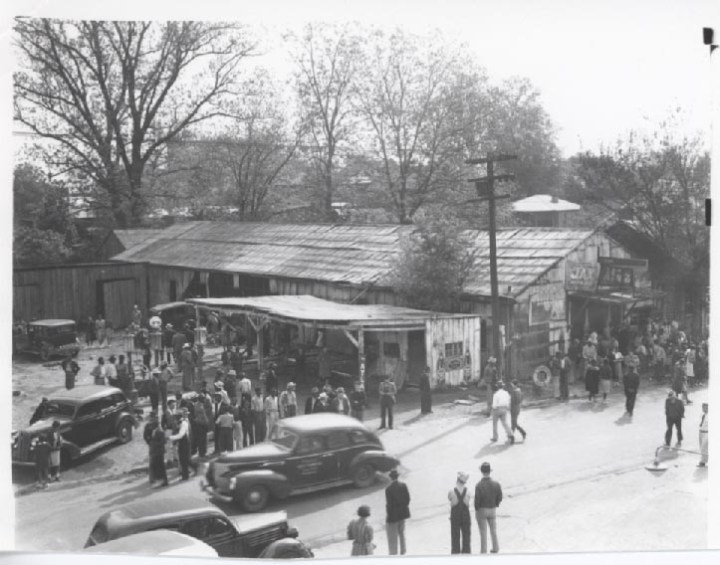
As many people know, I have been engaged for several years in researching a tragic event known as the Rhythm Club fire that took place in Natchez, Mississippi, on April 23, 1940. That fire took the lives of 209 African Americans and when it occurred it was the deadliest club fire in the history of the United States. Yet most Americans have never heard of it. Even worse neither have many Mississippians, because it never made it into the state’s history books nor in the historical scholarship about the state. The closest we’ve come to any assessment is that by folklorist Vincent Joos whose thesis, and an article in the Southern Quarterly, investigated the memory of the fire through blues songs, photographs, and interviews. This event captured my historian’s brain and I felt it was something worth investigating and writing about and I’ve spent weeks in various archives from Mississippi to Chicago to the National Archives in Washington, DC.
This past spring I worked diligently on a book proposal and wrote a sample chapter, the Chicago chapter, that explored the Great Migration of Mississippians, the jazz scene, and especially Walter Barnes–the maestro of a jazz orchestra he called his Royal Creolians. They were the group playing the Rhythm Club the night it burned. I then sent it to three agents, and while every single one of them told me how great the writing was, they all said they didn’t think they could sell the book. This was difficult to hear. As I told one of them, “you know, Black Mississippians get their asses handed to them on a daily basis in that state and this feels like one more dismissal of their lives.” Later, after messaging with a good friend, I decided I would just write the book and figure this part out later.
Right now, I’m committed to writing a chapter focused on the memory of the fire for an edited volume. It’s different from what Joos wrote, although his analysis of the blues are important, as are his interviews. So, I’ve been slogging away at that. And when I say “slog” I mean it. It’s like wading through ankle deep mud while carrying a bag of bricks. It’s heavy and it’s difficult. And it’s exhausting. I’ve kept at it because of the responsibility I feel to the people I’m writing about.
But it has come at the expense of my own self care and I’ve hit a breaking point. It’s been coming for awhile.
The research and writing for my last two books were hard on me emotionally, because both were focused on difficult history. Goat Castle (2018) was essentially a story of racial injustice. There were times while writing about the racial trauma of Emily Burns, the domestic who was unjustly convicted and sent to Parchman prison as an accomplice to murder, that I began to cry. I’d have to stop and go for walks to shake it off. It’s referred to as “secondary trauma” and scholars of slavery and racial violence understand and grapple with these feelings far more than I have, but I am in sympathy with them for the hard work they do.
Then in 2019, I was called on by UNC Press to write what became No Common Ground (2021). I did so with some hesitation, because not only had I written several op eds to lend some context to the national conversation about Confederate monuments, I had been on the road for two years speaking about the issue, trying to help people to understand the ugly history of white supremacy, racial injustice, and even racial violence that accompanied these seemingly static objects. As I was writing the pandemic hit, as did the isolation. Having to focus on this “hard history,” as the podcast of the same name calls it, was a difficult task and I melted down as I neared the finish line for that book.
Two years after its publication, my editor’s promise that No Common Ground would be the last word on the subject rings hollow, because I’m still being asked to speak and write about the damned monuments, as I call them. It is a burden, but one I’ve been willing to carry. I do so, because I believe it’s important to educate people about the topic and for them to also hear from a white southerner who speaks honestly about their meaning.
All the while, I have tried valiantly to move on to the book about the Rhythm Club fire, to explain why it was important to the Black community nationally, but especially to those who were so deeply affected by it. I am angry about its erasure from history, as we all should be.
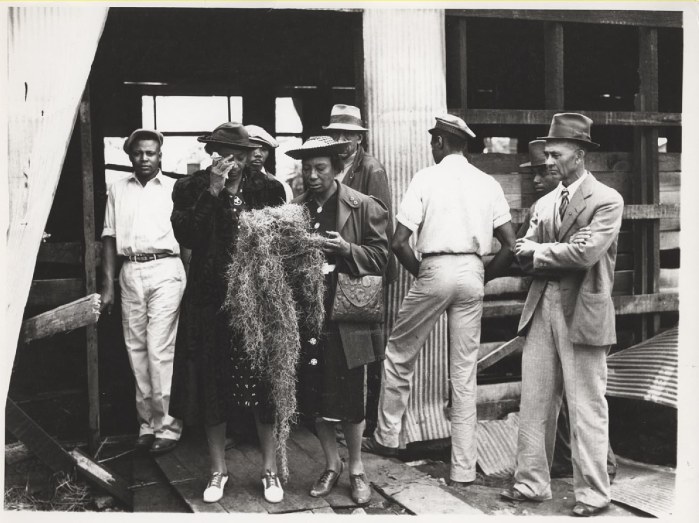
Yet this, too, is hard history. And it is rife with trauma. I think it is telling that of the two chapters I’ve written, one examines the history prior to the fire and the other examines the memory of the fire. I was not, and still am not, ready to write about the suffering of so many young people.
I have personally struggled to even be able to say this out loud, because I feel like I am failing so many people. My mother asked me “what about failing you?” It’s the kind of question that can stop you in your tracks. I realize that if I don’t take care of me, I will never be able to do the topic justice.
So, I’m stepping away from it for now and I’m not going to make predictions about if or when I’ll return to it. That’s just more stress that I simply do not need. I hope that my friends and those who have followed this journey will understand.
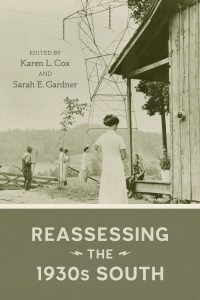 Then, in May, Louisiana University Press will release the volume


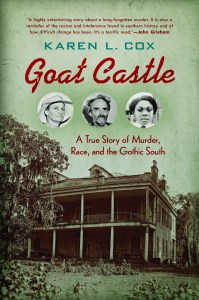 Writing Goat Castle was the most rewarding endeavor of my career. I met wonderful people in Natchez, got to know descendants of one of the principals in the book, and was able to write a book that most people have found accessible. Everyone from my Aunt Wilma to my hairdresser seems to like it, and not just because they know me.

 Karen L. Cox