Anticipation: Waiting for a Book’s Release

Whether you’re a fan of Carly Simon or The Rocky Horror Picture Show you are familiar with the word “anticipation.”  In song, it refers to waiting for a lover, but for the writer, it’s the anticipation of a book’s release.  And for scholars, the wait seems like a lifetime.

c635f6d503f5547578e0748886296821ea804ec159294e725fbc524f3454920cConsider, for example, my forthcoming book Goat Castle: A True Story of Murder, Race, and the Gothic South, which comes out October 9, 2017. I finished a draft of the manuscript on April 30, 2016, nearly four years after I began my research.  (I will offer a separate post on why it takes time for scholars to complete a manuscript.)

Over the summer, I revised the draft through a back and forth with my editor.  Then, in August 2016, I submitted the “final” draft of the manuscript to my press.

At that point, it was sent out to two reviewers–specialists who can provide feedback and critique to assess what works and where I, as the author, might find ways to improve or expand certain sections of the book.  This part of the process, while scheduled for two months, can take more time given the already busy schedules of the reviewers.  In my case, it took three months to get the reports, after which I responded to any necessary changes and by November I had the final contract.

Now it goes into the copy editing phase.  A professional copy editor pores over the manuscript to correct errors of grammar, suggest word choices, and ask questions.  Mine was so terrific, I refer to her as the “fox terrier of copy editors.”  And I mean that as a compliment, because she rooted out errors that I would never have seen.  After I receive the copy edited manuscript, then I have to fix all of the errors and resubmit it to the press.

Editor GIF - Find & Share on GIPHY

Almost done? Not quite. Now the book needs an index.  Some of my colleagues in the history world do this part themselves, since hiring a professional indexer costs money.  I don’t have the patience for this kind of tedious work, so I pay up.  More time goes by, the index gets done, I delete or ask questions about the final result, and now there’s an index.

At this point, we are about seven months in since I submitted the manuscript, and nearly a year since the original draft was completed.  Along the way, I must also complete a log of images and illustrations, and get permissions from various repositories to use them.

Now we’re rolling!

Happy Bob'S Burgers GIF - Find & Share on GIPHY

Next stop:  book jacket.  I’ve written about that process here.  That’s the time when you realize that this is going to be a book.  But, we’re still four months out!

That means it’s time for the publicity team to help you kick this thing into high gear.  And marketing is doing its job, too.  This is where an author can help herself and the press by assisting with the book’s promotion on social media. I do this through Facebook, Twitter, Instagram, and this website.  You are not a press’s only author, and in the case of university presses, they have a limited budget.  So, do your part and let there be no shame in your game. (I’ll be posting about that, too.)

anticipation-cat-oh-pleeeeease-let-me-read-it-nowAs of this writing, the book is three months out. But I can see the light at the end of the tunnel. All of the online retailers (Amazon, Barnes & Noble, IndieBound, Powell’s ) have the book listed.  Now we wait. And by we, I mean me, my family, my friends, the many wonderful people who assisted me in the research of my book, and so many others who ask:  when will the book be out? And why does it take so long?  I hope this post helps you understand.


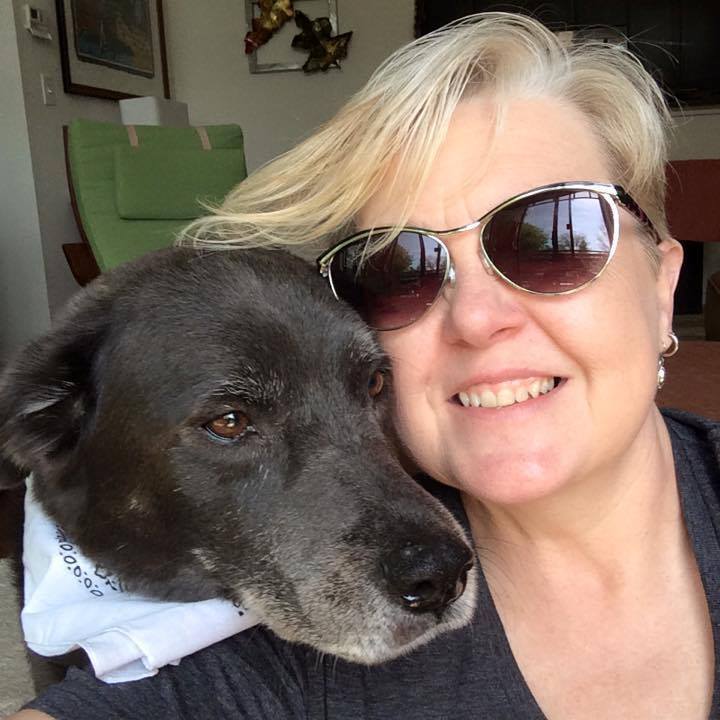
The author and her dog

The author and her dog
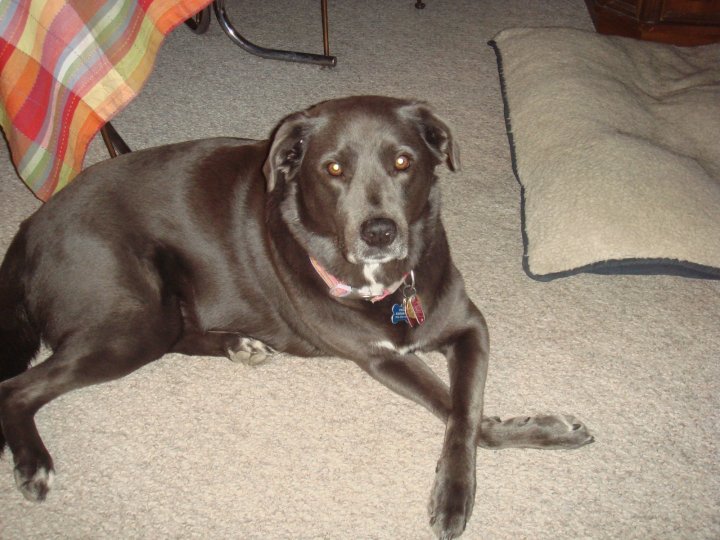
Me and my best girl, Phoebe.
Me and my best girl, Phoebe. 2015

We are pack animals. Authors and dogs. Dogs and authors. It doesn’t begin or end with memoirs like My Dog Skip or Marley and Me.  My Facebook and Instagram feeds are filled with photos of the dogs owned by my fellow writers, mostly historians because they’re my tribe, and I regularly post photos of my dog companion, Phoebe.

Phoebe. Pheebs. Pb. Sweet Pheebs. My gray girl. My boo who I often greet with “Hey, woo.” This is what happens to dog people. They invent language and terms of endearment to communicate with their four-legged companions.

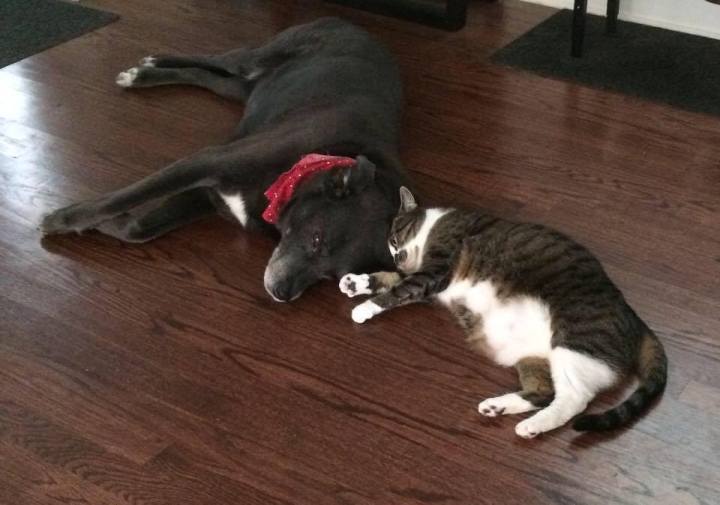
Even the cat loves Phoebe. 2016

Phoebe is pushing fourteen.  She’s been with me since June 2003. I mentally prepared for her arrival for weeks, knowing that it was a great responsibility.  I met her at the county animal shelter where they had given her the name “Ash,” because of her coloring.  It really is gray and not black.  They had also listed her as a chow mix, maybe because she was a chunky and fluffy ball of fur. But as she grew, and grew, it became clear that she is more of a lab mix than anything else.

Zzzzz.
Phoebe, 12 weeks. 2003

I brought her home and thought about her name. She was a gassy puppy. I teasingly referred to her as “fart blossom.” That became FB for short. And in trying to pronounce “FB” it became Phoebe. Despite this slightly embarassing beginning to her name, Phoebe, more than anything else, connotes sweetness.

babybellyphoebejuly-august20032
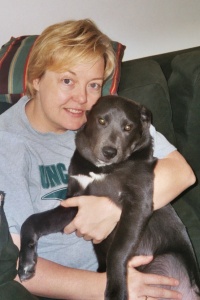
With Phoebe, July 2003.

She grew fast and her legs got long and she has always been able to make wonky shapes with them. In her youth, she greeted people by jumping on them–not the best manners–and now that she’s an older lady, she can’t jump, so she makes a high-pitched yelp when guests come to our house as a way of saying “pay attention to me first.”

My career would not have been the same without her.  She has given me a work/life balance. And as much as I’ve invested in her wellness over time, she has matched it with unconditional love, companionship, and contributed to my own well-being.  More recently, she has been the only being that has made the monasticism of writing my most recent book bearable.   Whether it was a sigh, a yawn, or a nudge to stop the tap, tap, tapping on my computer–she reminded me that I was not alone and breaks for fresh air and a walk are healthy.

Always a lady
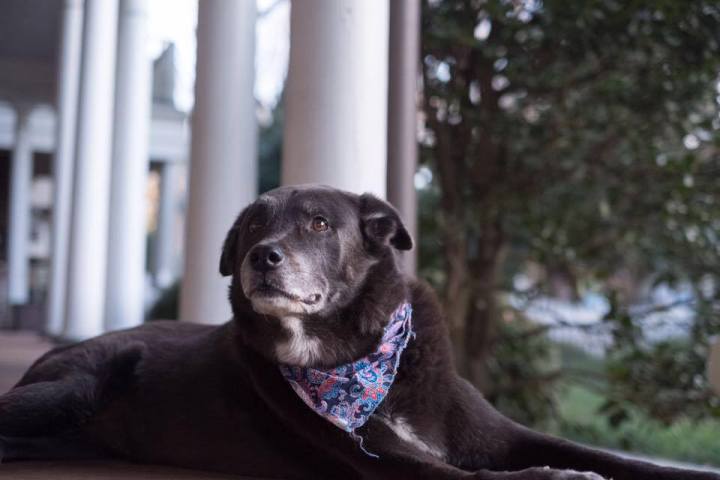
Always the lady. Phoebe in 2007.

So, it may come as no surprise to many of my fellow authors who often dedicate their books to their human companions that I decided, this time around, to dedicate my book to the companion most tried and true, Phoebe.  This will not make a difference in her life, because hers is one of routine–feeding, walking, and the search for the next good scratching of her hind end.

But it means the world to me. It’s an acknowledgement of her steadfastness and the unbounded joy she’s given.  It’s also been an honor to have her by my side for so many years.  We should all be so lucky.

Phoebe, December 2016. Photo credit: Logan Cyrus


Exploring the Land

Exploring the Land

Whenever I begin new writing projects, I do so not by heading directly to the archives, but by going to the place where events happened.  There’s usually something about the geography, the architecture, street patterns, and even the climate that helps me better understand the places I write about.

burwell-school-historic
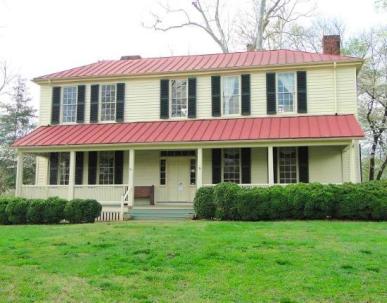
Burwell School, Hillsborough, NC

I’ve been doing this ever since I wrote my first serious undergraduate history paper.  The place was Hillsborough, North Carolina, and I wrote about a female seminary called the Burwell School that operated there beginning in the 1830s.  I went to Hillsborough, once the colonial capitol, to familiarize myself with the place. Fortunately, the building that housed the seminary was there, too, so I spent time in and around what had also been a large home.  In fact, very often such schools operated out of peoples’ homes–a fact I learned by going there.

Dunleithtourguide
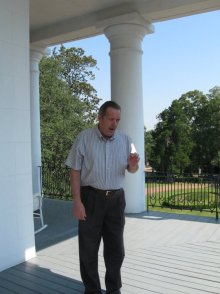
Sarah and I had a very entertaining tour guide at Dunleith

More recently, I’ve spent time in Natchez, Mississippi, where it all began with an exploratory trip with a fellow historian from Mercer University, Sarah Gardner. We flew into New Orleans, rented a car, and made the 3 hour drive to the little town on the bluffs. Had I done a better job of looking at a map, the closer airport for reaching Natchez is in Baton Rouge, less than an hour and a half drive away.

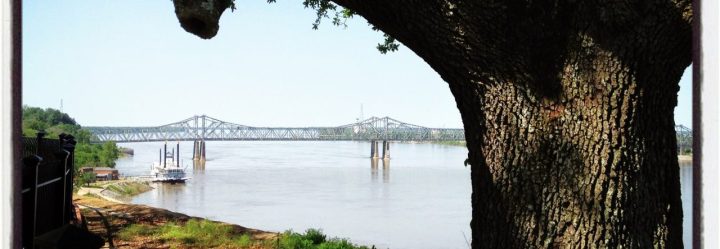
It was a great beginning to a new book project.  Seeing the town, walking its streets, touring some of its mansions, and going to the edge of the bluff on which the town overlooks the Mississippi River helped me gain a better perspective of the town’s historical importance in the antebellum era.  Over the course of several visits there, I continued to learn more about the town through its streets and geography.  So well, in fact, that I have even given people directions when I’ve been there on a research trip.

cropped-2014_-5_-8_13_131.jpg
Looking at the Mississippi River from the Natchez bluffs

It’s not always easy to get to the place one studies, especially for students.  Still, I think it’s a worthy goal to encourage them to go if they can, and find ways to assist them when they can’t, by encouraging them to study maps or even go on Google Earth to “see” the landscape for themselves.

landscapebog
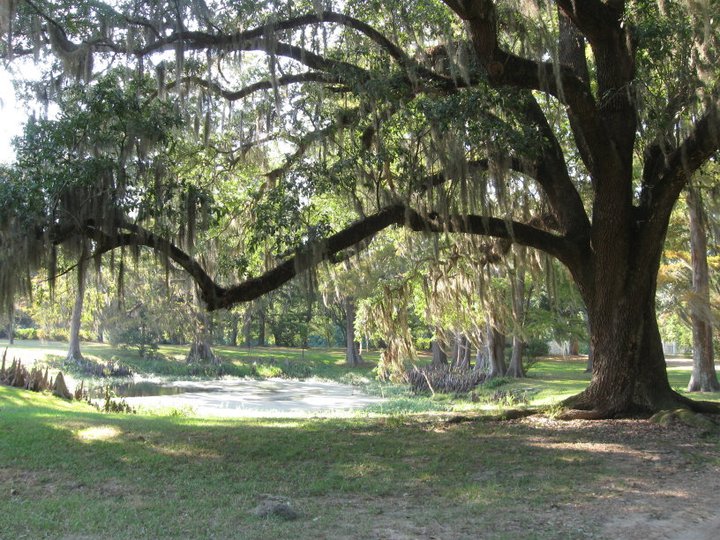
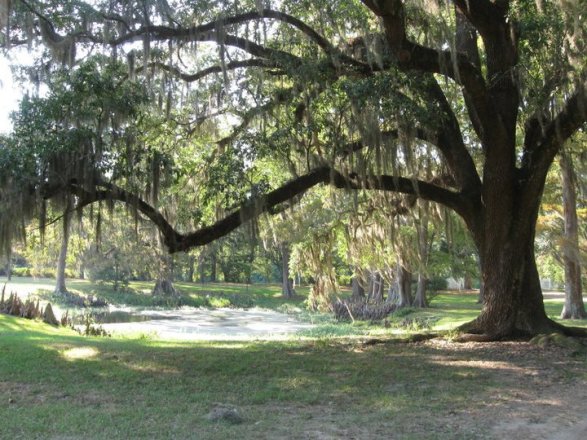
Cypress bog in front of Melrose, a suburban estate in Natchez

Exploring the land–both the natural and built environments–is a wonderful way to get to know the places we write about.  It also adds to our historical perspective.

Cheers,

KLC