Goat Castle Book Tour

GoatCastlerevisedcoverwithJG

Goat Castle’s run begins soon.  Return here for updates.

SEPTEMBER
15             Southern Independent Booksellers Association, New Orleans, LA @ 3pm

OCTOBER
4              Author’s Voice (A Virtual Book Signing), Chicago, IL

             Official publication date of Goat Castle!

10            Hub City Bookshop, Spartanburg, SC

13/14      Southern Festival of Books, Nashville, TN

18            Scuppernong Books, Greensboro, NC @ 7pm

21            Private Book Party, Charlotte, NC

23            Portier Lecture, Spring Hill College, Mobile, AL

27            Air date for About South podcast interview

28            Louisiana Book Festival, Baton Rouge, LA

NOVEMBER
6              Mississippi University for Women, Columbus, MS

8-11        Southern Historical Association, Dallas, TX (Event TBA)

14            Square Books, Oxford, MS @ 5pm

15            Lemuria Books, Jackson, MS @ 5pm

17-18       Natchez Book Launch: special events in the town where Goat Castle takes place


Anticipation: Waiting for a Book’s Release

Whether you’re a fan of Carly Simon or The Rocky Horror Picture Show you are familiar with the word “anticipation.”  In song, it refers to waiting for a lover, but for the writer, it’s the anticipation of a book’s release.  And for scholars, the wait seems like a lifetime.

c635f6d503f5547578e0748886296821ea804ec159294e725fbc524f3454920cConsider, for example, my forthcoming book Goat Castle: A True Story of Murder, Race, and the Gothic South, which comes out October 9, 2017. I finished a draft of the manuscript on April 30, 2016, nearly four years after I began my research.  (I will offer a separate post on why it takes time for scholars to complete a manuscript.)

Over the summer, I revised the draft through a back and forth with my editor.  Then, in August 2016, I submitted the “final” draft of the manuscript to my press.

At that point, it was sent out to two reviewers–specialists who can provide feedback and critique to assess what works and where I, as the author, might find ways to improve or expand certain sections of the book.  This part of the process, while scheduled for two months, can take more time given the already busy schedules of the reviewers.  In my case, it took three months to get the reports, after which I responded to any necessary changes and by November I had the final contract.

Now it goes into the copy editing phase.  A professional copy editor pores over the manuscript to correct errors of grammar, suggest word choices, and ask questions.  Mine was so terrific, I refer to her as the “fox terrier of copy editors.”  And I mean that as a compliment, because she rooted out errors that I would never have seen.  After I receive the copy edited manuscript, then I have to fix all of the errors and resubmit it to the press.

Editor GIF - Find & Share on GIPHY

Almost done? Not quite. Now the book needs an index.  Some of my colleagues in the history world do this part themselves, since hiring a professional indexer costs money.  I don’t have the patience for this kind of tedious work, so I pay up.  More time goes by, the index gets done, I delete or ask questions about the final result, and now there’s an index.

At this point, we are about seven months in since I submitted the manuscript, and nearly a year since the original draft was completed.  Along the way, I must also complete a log of images and illustrations, and get permissions from various repositories to use them.

Now we’re rolling!

Happy Bob'S Burgers GIF - Find & Share on GIPHY

Next stop:  book jacket.  I’ve written about that process here.  That’s the time when you realize that this is going to be a book.  But, we’re still four months out!

That means it’s time for the publicity team to help you kick this thing into high gear.  And marketing is doing its job, too.  This is where an author can help herself and the press by assisting with the book’s promotion on social media. I do this through Facebook, Twitter, Instagram, and this website.  You are not a press’s only author, and in the case of university presses, they have a limited budget.  So, do your part and let there be no shame in your game. (I’ll be posting about that, too.)

anticipation-cat-oh-pleeeeease-let-me-read-it-nowAs of this writing, the book is three months out. But I can see the light at the end of the tunnel. All of the online retailers (Amazon, Barnes & Noble, IndieBound, Powell’s ) have the book listed.  Now we wait. And by we, I mean me, my family, my friends, the many wonderful people who assisted me in the research of my book, and so many others who ask:  when will the book be out? And why does it take so long?  I hope this post helps you understand.


Book Covers, Design Choices, and the Author?

Note: This post primarily applies to university presses, since this is where I’ve published.

The design of a book cover should convey the essence of what’s inside and intrigue potential readers (read: buyers).  As an author, I’m interested in how a designer visualizes the title and the ideas I’ve expressed in a book I’ve written or edited.  This can be both exciting (“The designer got it!”) or worrisome (“Whoa, that’s really off the mark!”).   It’s a process that I didn’t pay much attention to with my first book, and one I am far more invested in at this point in my career.

Consider the design of Dixie’s Daughters: The United Daughters of the Confederacy and the Preservation of Confederate Culture, published in 2003.   I didn’t have any quibbles with the font and the designer tried to incorporate some element of Confederate symbolism in the reddish bar below the photograph by adding stars.  Stars and bar, anyone?  There’s also a Confederate gray, one might say.

The photograph, one I found, is from a girls’ school in Texas where the students wore Confederate-inspired uniforms and are all standing at attention with rifles cast over their left shoulders, as though they were members of the CSA.  This conveyed a theme in my book, which is that it was women who took on the cause of Confederate memory and, in a sense, they were soldiers in the Lost Cause.

The only issue I had with the cover was that the initial gray color in the title muted my name and it couldn’t be seen.  This was upsetting, since it was my first book. It has since been corrected.

My second book Dreaming of Dixie: How the South Was Created in American Popular Culture came out in 2011.  A lot had changed since 2003. I was a more mature scholar and while I was open to the designer’s interpretation, it turned out that I needed to weigh in on this decision.

Because there were hundreds of songs written about the South by Tin Pan Alley lyricists, there was an equally large number of sheet music designs from which to draw from.  The art of Tin Pan Alley “Dixie songs” were, as you might expect, rich in color and design.  Like a book cover, the sheet music art was intended to convey the story told by the song, so the designer had plenty to draw from.

Some of the covers, however, should come with a warning: “Beware of racist caricatures!”  It should be implicit, really, but for some reason the initial design for this book actually drew from one of those racist covers.  That was when I said “hold up!”  The designer clearly misunderstood the implicit message.
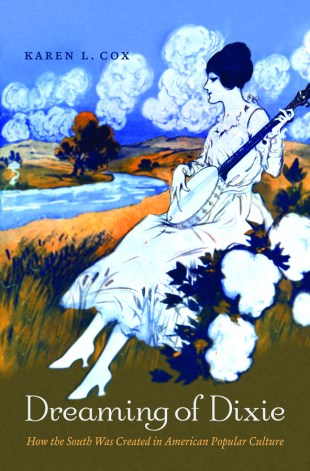
The revised design got it right, because this was a book about how the South had been romanticized in American popular culture prior to the advent of television.  Here’s Miss Southern Belle strumming her banjo, sitting on some oversized cotton bolls and gazing out on a bucolic southern landscape.  Even the clouds look like cotton.  The art work is adapted from the sheet music for the song “The Whole World Comes From Dixie (When They Play That Dixie Tune).” No problems with seeing my name here.

My latest book, which presumes there’ll be another out in the ether, is Goat Castle: A True Story of Murder, Race, and the Gothic South.  It comes out in October, but I’ve already got a jacket design, because marketing! (Speaking of marketing. . . reviewers, book bloggers, librarians, and other avid readers can now request to see the galleys on NetGalley.)

It’s a true crime story that drew on my skills as a historian, but it is written to be accessible to a broader audience.  Set in Depression-era Natchez, Mississippi, it offers insight into the decline of the Old South and southern families, but also about the Jim Crow South and the racial justice that sent an innocent woman named Emily Burns to one of the most notorious prisons in the region at the time, the Mississippi State Penitentiary, better known as Parchman.

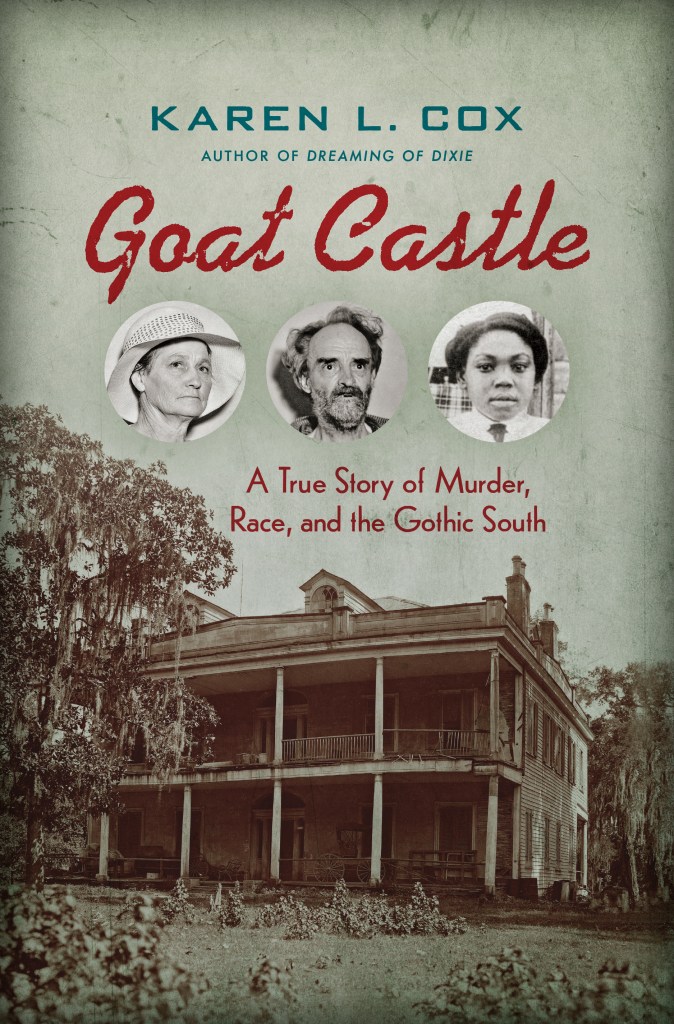
This book is very personal to me and so I really wanted the cover to reflect something of the southern gothic drama that unfolded that year, which resulted in national headlines. I also wanted to recognize Emily Burns, who family members called “Sister,” since she was the other victim in this crime.  She had to be on the cover. It had taken me five years to find a photograph of her and, more to the point, up until now, community memory had virtually erased her from the story.

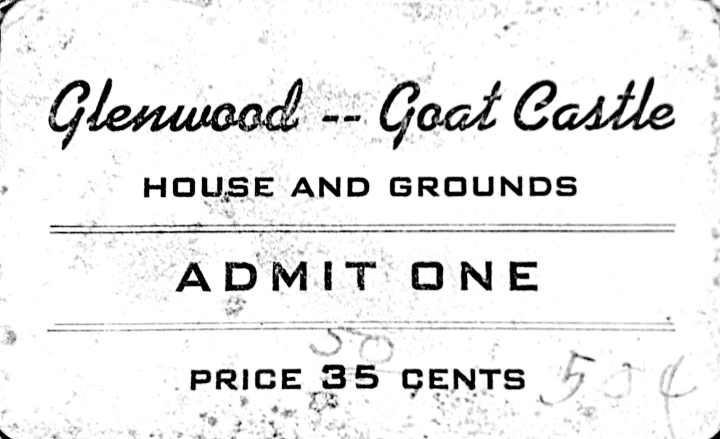
First take on the design? No Emily.  “It didn’t work. It was confusing. Looks like she was the one murdered,” I was told.  “We can put her on the back cover.”  No, no, no.  This perpetuates her place in the story as being in the background.  No.  I also worried about the font of the title, so I pushed back.  Next take: New font, Emily, and two of the other principals in the case.  Much better.  Then I gave consideration to the original font design, because I was wrong. It was right on the money, because the font had been adapted from a ticket to Goat Castle (also known as “Glenwood”)  in the 1930s. You’ll have to buy the book to learn why there were tickets to Goat Castle.
The final take on the design pushed all of the buttons–southern gothic, image of Goat Castle, the two white principals Dick Dana and Octavia Dockery, but Emily “Sister” Burns was there, too.  There was also the font that drew from the ticket.  Success!
I’m not suggesting that an author be involved in design.  In my case, I’m a historian and so just as I wouldn’t want a designer to correct me about history, it works the same in reverse. At the same time, the book represents you and your work, so when the situation merits your involvement, I believe that you can and should have a honest conversation with your press.  Be willing to compromise, however, because your press is responsible for marketing your book.

Feel free to share your own experiences in the comment section below.

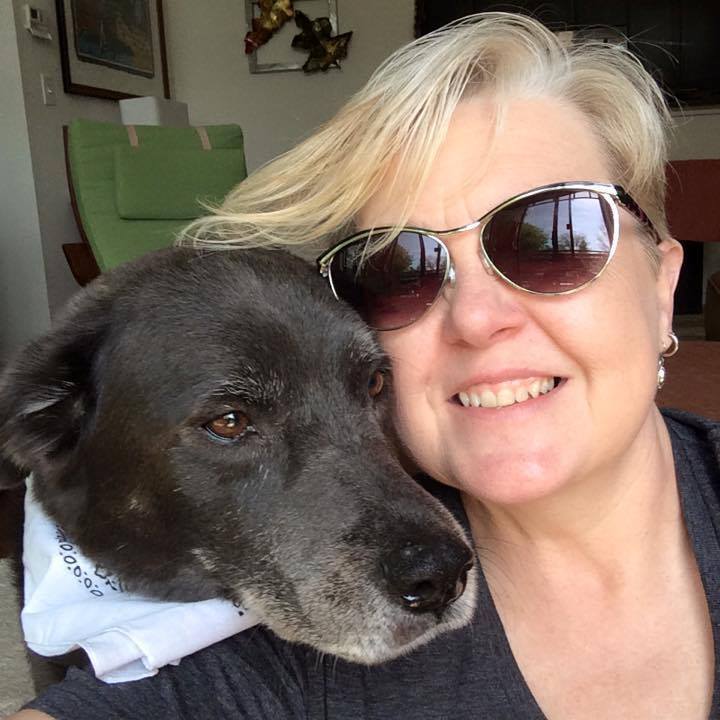
The author and her dog

The author and her dog
Me and my best girl, Phoebe.
Me and my best girl, Phoebe. 2015

We are pack animals. Authors and dogs. Dogs and authors. It doesn’t begin or end with memoirs like My Dog Skip or Marley and Me.  My Facebook and Instagram feeds are filled with photos of the dogs owned by my fellow writers, mostly historians because they’re my tribe, and I regularly post photos of my dog companion, Phoebe.

Phoebe. Pheebs. Pb. Sweet Pheebs. My gray girl. My boo who I often greet with “Hey, woo.” This is what happens to dog people. They invent language and terms of endearment to communicate with their four-legged companions.

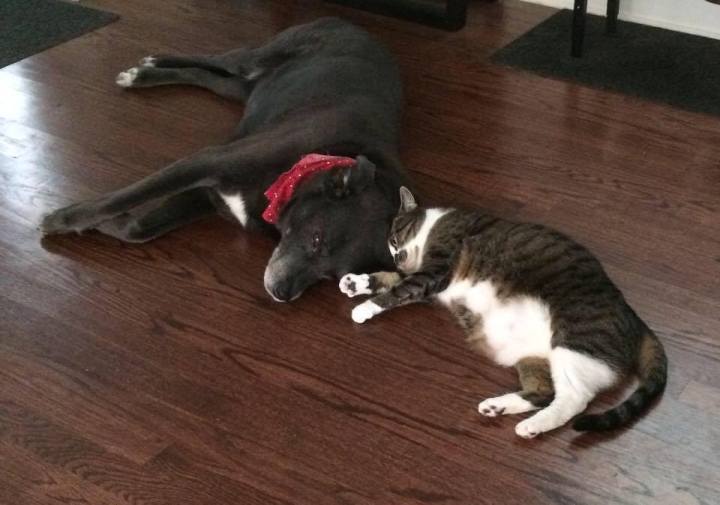
Even the cat loves Phoebe. 2016

Phoebe is pushing fourteen.  She’s been with me since June 2003. I mentally prepared for her arrival for weeks, knowing that it was a great responsibility.  I met her at the county animal shelter where they had given her the name “Ash,” because of her coloring.  It really is gray and not black.  They had also listed her as a chow mix, maybe because she was a chunky and fluffy ball of fur. But as she grew, and grew, it became clear that she is more of a lab mix than anything else.

Zzzzz.
Phoebe, 12 weeks. 2003

I brought her home and thought about her name. She was a gassy puppy. I teasingly referred to her as “fart blossom.” That became FB for short. And in trying to pronounce “FB” it became Phoebe. Despite this slightly embarassing beginning to her name, Phoebe, more than anything else, connotes sweetness.

babybellyphoebejuly-august20032
With Phoebe, July 2003.

She grew fast and her legs got long and she has always been able to make wonky shapes with them. In her youth, she greeted people by jumping on them–not the best manners–and now that she’s an older lady, she can’t jump, so she makes a high-pitched yelp when guests come to our house as a way of saying “pay attention to me first.”

My career would not have been the same without her.  She has given me a work/life balance. And as much as I’ve invested in her wellness over time, she has matched it with unconditional love, companionship, and contributed to my own well-being.  More recently, she has been the only being that has made the monasticism of writing my most recent book bearable.   Whether it was a sigh, a yawn, or a nudge to stop the tap, tap, tapping on my computer–she reminded me that I was not alone and breaks for fresh air and a walk are healthy.

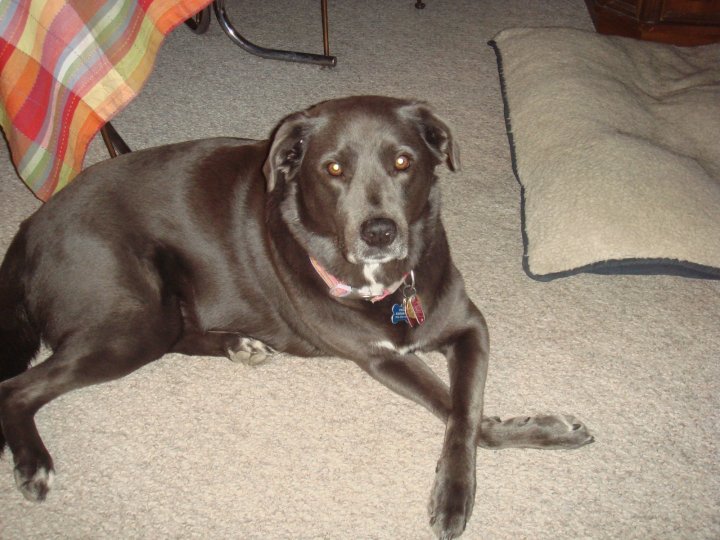
Always a lady
Always the lady. Phoebe in 2007.

So, it may come as no surprise to many of my fellow authors who often dedicate their books to their human companions that I decided, this time around, to dedicate my book to the companion most tried and true, Phoebe.  This will not make a difference in her life, because hers is one of routine–feeding, walking, and the search for the next good scratching of her hind end.

But it means the world to me. It’s an acknowledgement of her steadfastness and the unbounded joy she’s given.  It’s also been an honor to have her by my side for so many years.  We should all be so lucky.

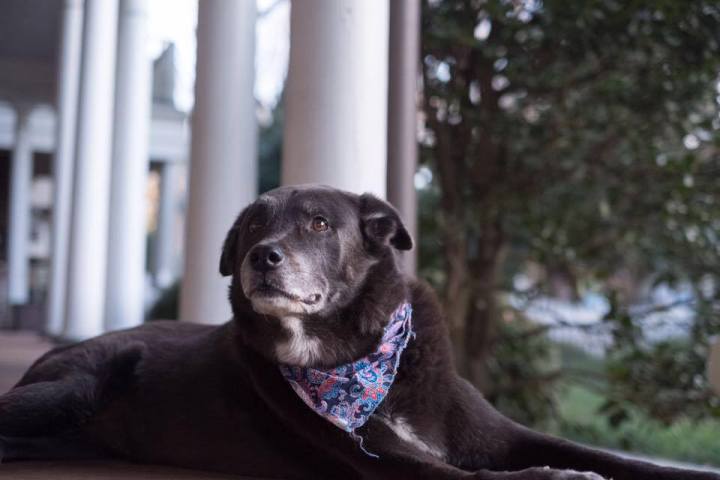
Phoebe, December 2016. Photo credit: Logan Cyrus


W is for Waffle House

W is for Waffle House

This weekend an exhibit of images and texts called Southern Icons, A to Z opened in Pike County, Georgia.  For each letter of the alphabet, the curators chose an icon. Numerous southern writers and artists were invited to participate and I count myself lucky to be among them. In my case, I was invited to participate by writing the text that accompanied a photograph by Tammy Mercure.  We were given the letter “W” for Waffle House.  Unfortunately, I cannot be there for the opening, but here is our entry:

mercure
Photo by Tammy Mercure

My contribution:

Cultural icons, even a southern icon as familiar to the region as Waffle House, has a history. The restaurant, founded on a short order concept, first opened in 1955 in Avondale Estates, a suburb of Atlanta, Georgia. The idea behind the restaurant was simple: provide good food quickly, especially a great breakfast waffle, and provide friendly customer service—a dollop of southern hospitality, if you will. Add a jukebox and a menu that offered customers a bang for their buck and the result was rapid success.

Yet what often makes a restaurant a cultural icon is its brand, in this case, the Waffle House sign. Using yellow glass blocks that spell out W A F F L E
H O U S E in large black letters, the sign beckons customers day and night. As Tammy Mercure’s photograph illustrates, its power is in its simplicity. For many, it signals a nostalgic memory of their youth—food after a football game or the 3 a.m. munchies following a night of revelry. And for so many more, it has come to symbolize a shared experience around food, in a familiar setting, that transcends race, class, and generation.